logo
ホーム > 製品 > ガラスMicroballoons >
Glass Microballoons Hollow Glass Spheres with Temperature Resistance Up To 600°C Chemical Resistance and Spherical Shape

Glass Microballoons Hollow Glass Spheres with Temperature Resistance Up To 600°C Chemical Resistance and Spherical Shape

Temperature Resistance Glass Microballoons

Chemical Resistance Hollow Glass Spheres

Spherical Shape Glass Microspheres

送信

引用を要求しなさい
製品詳細
熱縮み:
0.2
直径:
20-75 µm
材料:
ガラス
耐薬品性:
ほとんどの化学薬品に対する優れた耐性
化学組成:
SIO2、NA2O、CAO、MGO、AL2O3
熱伝導率:
0.05W/m・K
温度耐性:
最大600°C
形:
球状
支払及び船積みの言葉
製品の説明

Product Description:

Glass Microballoons are advanced, lightweight spherical particles that are widely used in various industrial applications due to their exceptional properties and performance. These microballoons possess a bulk density ranging from 0.15 to 0.3 g/cm³, making them incredibly light while maintaining structural integrity. Their unique combination of low density and high strength makes them ideal for enhancing the characteristics of composite materials, improving insulation, and reducing weight without compromising durability.

The chemical composition of these Glass Microballoons primarily includes SiO2 (silicon dioxide), Na2O (sodium oxide), CaO (calcium oxide), MgO (magnesium oxide), and Al2O3 (aluminum oxide). This specific blend of oxides is meticulously formulated to provide excellent chemical stability, thermal resistance, and mechanical strength. The silica content (SiO2) ensures robustness, while the presence of alkali and alkaline earth metal oxides like Na2O, CaO, and MgO contributes to the microballoons’ resilience against environmental factors and chemical degradation. Additionally, Al2O3 enhances the hardness and corrosion resistance, making these microballoons suitable for demanding applications in aerospace, automotive, and construction industries.

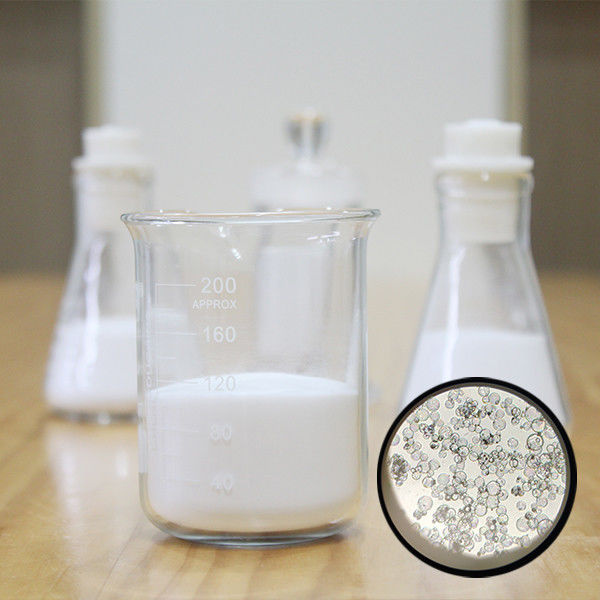
One of the defining features of these Glass Microballoons is their perfectly spherical shape. The spherical geometry is critical because it allows for uniform dispersion within matrices such as polymers, resins, and cementitious materials. This shape contributes to reducing the viscosity of mixtures, improving flow characteristics, and ensuring consistent mechanical properties throughout the composite. The spherical form also aids in minimizing stress concentrations, which can lead to improved impact resistance and longevity of the end products.

The wall thickness of the microballoons ranges between 1 and 2 microns. This thin yet strong wall structure is vital for providing the balance between lightness and strength. The thin walls make the microballoons hollow, significantly reducing the overall weight of materials they are incorporated into, without compromising compressive strength. This characteristic is especially beneficial in applications where weight savings are crucial, such as in aerospace components, lightweight coatings, and buoyant materials.

These Glass Microballoons exhibit an average diameter range from 10 to 100 microns. This size range allows for versatility in application, enabling manufacturers to select the appropriate size to optimize the balance between surface area and volume. Smaller microballoons within this range can fill microscopic voids and enhance surface smoothness, while larger ones contribute to greater volume reduction and improved insulation properties. The consistent size distribution also ensures predictable performance and ease of processing.

In summary, Glass Microballoons offer a unique combination of low bulk density, robust chemical composition, spherical shape, thin wall thickness, and a versatile size range. Their bulk density of 0.15-0.3 g/cm³ allows for significant weight reduction in composite materials, while their chemical makeup of SiO2, Na2O, CaO, MgO, and Al2O3 ensures durability and stability under various conditions. The spherical shape enhances flow and mechanical properties, and the 1-2 micron wall thickness provides the essential strength-to-weight ratio. With an average diameter spanning 10-100 microns, these microballoons cater to a wide range of industrial needs, making them an indispensable material for manufacturers looking to improve product performance and efficiency.


Features:

  • Product Name: Glass Microballoons
  • Temperature Resistance: Up to 600°C
  • Bulk Density: 0.15-0.3 g/cm³
  • Average Diameter: 10-100 microns
  • Chemical Resistance: Good resistance to most chemicals
  • True Density: 0.58-0.62 g/cm³
  • Contains 2 key features for enhanced performance
  • Offers 2 levels of temperature resistance for versatile applications
  • Provides 2 types of chemical resistance for durability

Technical Parameters:

Color White Or Off-white
Bulk Density 0.15-0.3 G/cm³
True Density 0.58-0.62
Wall Thickness 1-2 Microns
Shape Spherical
Material Glass
Compressive Strength Up To 100 MPa
Chemical Composition SiO2, Na2O, CaO, MgO, Al2O3
Chemical Resistance Good Resistance To Most Chemicals
Applications Lightweight Fillers, Insulation, Composites, Syntactic Foams

Applications:

Glass Microballoons are versatile materials widely used across various industries due to their unique properties and exceptional performance. Known for their excellent chemical resistance, these microballoons can withstand exposure to most chemicals without degrading, making them ideal for applications where durability and longevity are critical. Their high temperature resistance, up to 600°C, further enhances their suitability for demanding environments, including high-temperature processing and insulation tasks.

One of the primary applications of Glass Microballoons is as lightweight fillers. Their low true density, ranging from 0.58 to 0.62, allows manufacturers to reduce the overall weight of composite materials without compromising strength or integrity. This characteristic is particularly valuable in the aerospace, automotive, and marine industries, where reducing weight can lead to improved fuel efficiency and performance. Additionally, their white or off-white color ensures that they blend well with various resin systems and coatings, maintaining aesthetic appeal in finished products.

Glass Microballoons are also extensively used in insulation applications. Their excellent thermal stability and low density contribute to effective thermal insulation solutions, especially in environments exposed to extreme temperatures. In syntactic foams, these microballoons provide enhanced buoyancy and structural integrity, making them indispensable in subsea and underwater applications where lightweight, durable materials are necessary.

Composites reinforced with Glass Microballoons benefit from improved mechanical properties, such as increased compressive strength and reduced shrinkage. This makes them suitable for use in construction materials, sporting goods, and electronic encapsulation, where precision and reliability are essential. The ability of these microballoons to maintain performance under chemical and thermal stress ensures their effectiveness in a wide range of scenarios.

In summary, Glass Microballoons serve multiple roles across diverse application occasions and scenarios. Whether used as lightweight fillers, insulation materials, or components in syntactic foams and composites, their chemical resistance, high temperature tolerance, and low true density make them a valuable choice for industries seeking robust, lightweight, and reliable solutions. Their adaptable color options and excellent physical properties further expand their usability, making them a preferred material for innovative manufacturing processes and high-performance product development.


FAQ:

Q1: What are Glass Microballoons used for?

A1: Glass Microballoons are lightweight, hollow glass spheres commonly used as fillers in composites, adhesives, and coatings to reduce density and improve thermal insulation.

Q2: What is the typical size range of Glass Microballoons?

A2: The particle size of Glass Microballoons typically ranges from 10 to 100 microns, allowing for smooth integration into various formulations.

Q3: Are Glass Microballoons chemically inert?

A3: Yes, Glass Microballoons are chemically inert and resistant to most acids and alkalis, making them suitable for use in harsh chemical environments.

Q4: How do Glass Microballoons affect the strength of composite materials?

A4: Incorporating Glass Microballoons reduces the weight of composites while maintaining adequate strength and improving thermal and acoustic insulation properties.

Q5: Can Glass Microballoons be used in high-temperature applications?

A5: Glass Microballoons have good thermal stability and can typically withstand temperatures up to around 600°C, making them suitable for various high-temperature applications.


私達にあなたの照会を直接送りなさい

プライバシーポリシー規約 中国の良質 空のガラスmicrospheres メーカー。Copyright© 2023-2026 hollow-microspheres.com . 複製権所有。