logo
ホーム > 製品 > ガラスMicroballoons >
Compressive Strength Up To 100 MPa Glass Microballoons Hollow Glass Spheres With Temperature Resistance Up To 600°C For Lightweight Fillers

Compressive Strength Up To 100 MPa Glass Microballoons Hollow Glass Spheres With Temperature Resistance Up To 600°C For Lightweight Fillers

high strength glass microballoons

lightweight SiO2 fillers

industrial glass microballoons with warranty

送信

引用を要求しなさい
製品詳細
温度耐性:
最大600°C
形:
球状
圧縮強度:
100 MPaまで
かさ密度:
0.15~0.3G/cm3
材料:
ガラス
平均直径:
10~100ミクロン
色:
白いですかオフホワイト
化学組成:
SIO2、NA2O、CAO、MGO、AL2O3
支払及び船積みの言葉
製品の説明

Product Description:

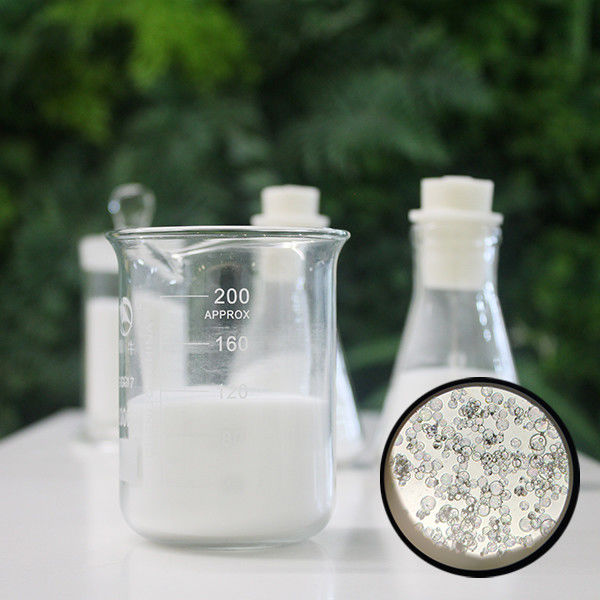
Glass Microballoons are highly specialized spherical particles with an average diameter ranging from 10 to 100 microns, making them an ideal choice for a variety of industrial and scientific applications. These tiny, hollow glass spheres possess a true density between 0.58 and 0.62, which contributes significantly to their lightweight nature. Their unique characteristics enable manufacturers and engineers to enhance the performance, reduce the weight, and improve the thermal insulation properties of their products.

One of the most notable features of Glass Microballoons is their perfectly spherical shape, which ensures uniformity and consistency in the materials they are incorporated into. This spherical shape is crucial for maintaining structural integrity and achieving optimal performance in composites and syntactic foams. The uniform size distribution and shape allow for easy mixing and dispersion, leading to better processing and improved mechanical properties of the final product.

Glass Microballoons find extensive use as lightweight fillers in a wide range of applications. Their low true density enables the reduction of overall material weight without compromising strength or durability. This attribute is particularly beneficial in industries such as aerospace, automotive, and marine, where weight reduction is a critical factor for improving fuel efficiency and performance. By incorporating these microballoons, manufacturers can create lighter, stronger, and more efficient parts and components.

In addition to their role as lightweight fillers, Glass Microballoons are highly valued for their excellent insulation properties. Their hollow structure traps air, which is a poor conductor of heat, making these microballoons ideal for thermal insulation applications. They are used in building materials, coatings, and insulation panels to enhance energy efficiency by reducing heat transfer. This temperature resistance capability extends up to 600°C, enabling their use in high-temperature environments without degradation or loss of performance.

Another important application of Glass Microballoons is in the production of syntactic foams, which are composite materials made by embedding these hollow spheres into a matrix material such as epoxy, polymer, or metal. Syntactic foams exhibit superior strength-to-weight ratios, excellent buoyancy, and enhanced compressive strength, making them suitable for underwater and aerospace applications. The ability of Glass Microballoons to withstand temperatures up to 600°C also broadens their applicability in demanding environments where thermal stability is essential.

The versatility of Glass Microballoons extends to their use in advanced composites, where they improve mechanical properties and reduce density. Composites reinforced with these microballoons demonstrate improved fatigue resistance, reduced shrinkage, and enhanced dimensional stability. This makes them highly sought after in the manufacture of sporting goods, automotive parts, and lightweight construction materials. The incorporation of Glass Microballoons leads to innovations that balance performance with cost-effectiveness.

In summary, Glass Microballoons are an indispensable material characterized by their average diameter of 10-100 microns, true density of 0.58-0.62, and spherical shape. Their applications span lightweight fillers, insulation, composites, and syntactic foams, all benefiting from their low density and high temperature resistance up to 600°C. The unique properties of Glass Microballoons make them a critical component in modern manufacturing processes aimed at producing lightweight, durable, and thermally stable products. Whether used to improve insulation, reduce weight, or enhance composite materials, these microballoons continue to play a vital role across multiple industries.


Features:

  • Product Name: Glass Microballoons
  • Temperature Resistance: Up to 600°C
  • Bulk Density: 0.15-0.3 g/cm³
  • Shape: Spherical
  • Chemical Resistance: Good resistance to most chemicals
  • Compressive Strength: Up to 100 MPa

Technical Parameters:

Temperature Resistance Up To 600°C
Bulk Density 0.15-0.3 G/cm³
Material Glass
Chemical Composition SiO2, Na2O, CaO, MgO, Al2O3
Average Diameter 10-100 Microns
Wall Thickness 1-2 Microns
Compressive Strength Up To 100 MPa
True Density 0.58-0.62
Shape Spherical
Diameter 20-75 µm

Applications:

Glass Microballoons are versatile materials widely used in various industrial and commercial applications due to their unique properties. Made from high-quality glass, these microballoons have an average diameter ranging from 10 to 100 microns, making them ideal for use in lightweight composites, thermal insulation, and structural reinforcement. Their low thermal conductivity of 0.2 significantly enhances the thermal insulation performance of materials, making them suitable for applications where heat resistance and energy efficiency are critical.

One of the primary application occasions for Glass Microballoons is in the production of lightweight composite materials. By incorporating these microballoons, manufacturers can reduce the overall weight of products without compromising strength. With a compressive strength of up to 100 MPa, Glass Microballoons provide excellent load-bearing capacity, making them perfect for use in aerospace, automotive, and marine industries where weight reduction and durability are essential. Additionally, their good chemical resistance ensures that the composites can withstand exposure to harsh chemicals, extending the lifespan and reliability of the final products.

Glass Microballoons also find extensive use in thermal insulation scenarios. Their low thermal conductivity helps improve the insulation properties of coatings, adhesives, and sealants used in construction and industrial equipment. This makes them suitable for applications such as insulating pipes, tanks, and other equipment operating at high or low temperatures. Furthermore, their small size and spherical shape enable easy dispersion in various matrices, ensuring uniform insulation performance.

In summary, Glass Microballoons are an excellent choice for applications requiring lightweight, strong, and chemically resistant materials with superior thermal insulation. Whether used in composites, coatings, or insulation materials, these microballoons enhance product performance across a range of industries. Their unique combination of attributes—material composition, particle size, thermal conductivity, compressive strength, and chemical resistance—makes them indispensable in modern manufacturing and engineering solutions.


FAQ:

Q1: What are Glass Microballoons?

A1: Glass Microballoons are tiny, hollow glass spheres used to reduce the density of composite materials, improve insulation, and enhance strength while maintaining lightweight properties.

Q2: What industries commonly use Glass Microballoons?

A2: Glass Microballoons are widely used in aerospace, automotive, marine, construction, and electronics industries for applications such as lightweight composites, buoyancy aids, and thermal insulation.

Q3: How do Glass Microballoons improve material performance?

A3: By incorporating Glass Microballoons into materials, you can achieve reduced weight, increased volume, improved thermal insulation, and enhanced mechanical properties like impact resistance.

Q4: Are Glass Microballoons compatible with different resins and adhesives?

A4: Yes, Glass Microballoons are compatible with a variety of resins including epoxy, polyester, and vinyl ester, making them versatile for different composite formulations.

Q5: How should Glass Microballoons be stored?

A5: Glass Microballoons should be stored in a cool, dry place in tightly sealed containers to prevent moisture absorption and maintain their performance characteristics.


私達にあなたの照会を直接送りなさい

プライバシーポリシー規約 中国の良質 空のガラスmicrospheres メーカー。Copyright© 2023-2026 hollow-microspheres.com . 複製権所有。